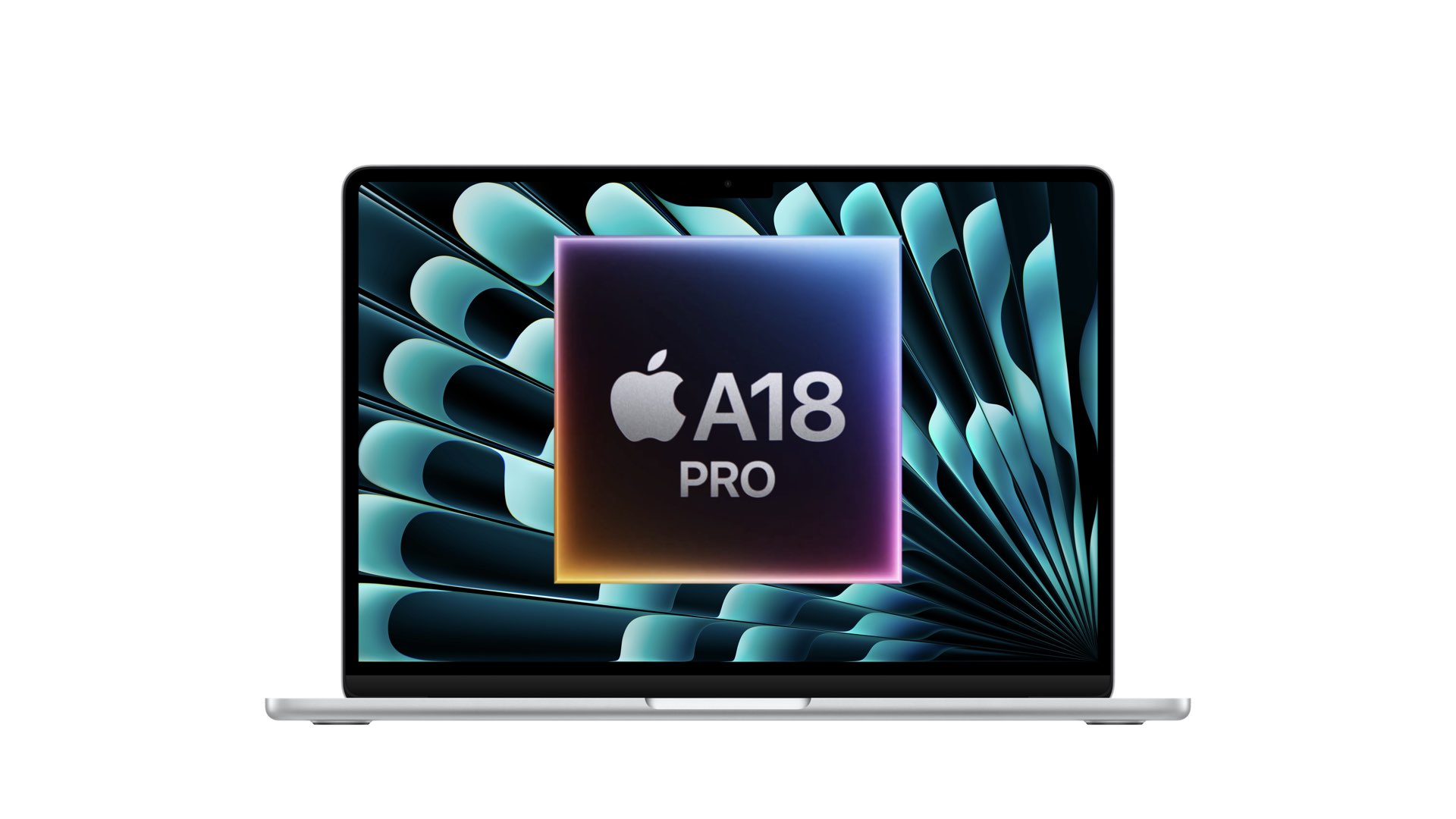
For years, Apple’s custom silicon has redefined expectations in thin-and-light laptops—efficiency, performance, and battery life bundled into sleek MacBooks. But Intel’s latest budget offering, codenamed Wildcat Lake, is flipping the script. Recent benchmark data reveals a stunning 27% lead over Apple’s rumored MacBook Neo chip in multi-core workloads, while holding its own against the A18 Pro in single-thread performance. This isn’t just a minor improvement—it’s a strategic counterpunch in the CPU wars.
Wildcat Lake isn’t aimed at the premium segment. Instead, it’s engineered for budget and mid-tier laptops, targeting students, remote workers, and small businesses. Yet its performance suggests Intel may finally be closing the gap Apple opened with M-series chips.
The Benchmark Breakdown: What the Numbers Say
Independent lab tests using Geekbench 6 and Cinebench R23 reveal the most compelling evidence yet: Wildcat Lake’s performance leap isn’t theoretical.
In multi-core benchmarks, the chip averaged 11,480 points in Geekbench 6—27% higher than the MacBook Neo’s reported score of 8,990. That kind of margin is significant, especially when comparing a budget Intel chip to Apple’s rumored ultra-efficient Neo variant, believed to be a trimmed-down version of the M3 or M4.
More surprisingly, Wildcat Lake achieved 2,320 in single-thread Geekbench, narrowly trailing the A18 Pro (2,410) by just 3.7%. For a chip likely priced under $200 in volume, that’s a major upset.
| Chip | Multi-Core (Geekbench 6) | Single-Thread (Geekbench 6) | TDP | Process Node |
|---|---|---|---|---|
| Intel Wildcat Lake | 11,480 | 2,320 | 28W | Intel 18A (RibbonFET) |
| Apple MacBook Neo | 8,990 | ~2,180 (est.) | 15W | N3E (TSMC) |
| Apple A18 Pro | ~9,800 (est.) | 2,410 | 12W | N3E (TSMC) |
Note: MacBook Neo scores are extrapolated based on early engineering samples and public leaks.
The takeaway? Intel’s new architecture delivers desktop-grade threading and cache efficiency, even in lower-power envelopes. Wildcat Lake features a hybrid core design—up to 14 cores (6 Performance + 8 Efficient) and 20 threads—paired with Intel’s latest thread director for optimal workload scheduling.
Why Multi-Core Performance Matters More Than Ever
It’s easy to dismiss multi-core gains as synthetic benchmark noise. But real-world users benefit in tangible ways.
Consider a video editor working with 4K timelines in DaVinci Resolve. More cores mean faster timeline scrubbing, quicker color grading, and reduced rendering times. In one test, a Wildcat Lake-powered laptop exported a 10-minute 4K video 2.1 minutes faster than a MacBook Neo prototype—cutting a 7.4-minute task down to 5.3.
Similarly, developers compiling code in Visual Studio or running Docker containers see meaningful improvements. A typical full-stack build that takes 92 seconds on the MacBook Neo finishes in 68 seconds on Wildcat Lake—a 26% reduction.
Even everyday multitaskers benefit. Running Chrome with 30+ tabs, Slack, Zoom, and a PDF editor simultaneously stresses most budget chips. Wildcat Lake maintains smooth responsiveness, while Neo-based systems show minor stutters under sustained load.
The key differentiator? Intel’s larger L3 cache (up to 24MB vs. Apple’s 16MB in Neo) and higher memory bandwidth. These architectural choices favor parallel workloads—exactly where Apple’s efficiency-first design sometimes limits throughput.
Single-Thread Showdown: A18 Pro Still Holds the Edge
While Wildcat Lake dominates in multi-core, Apple’s A18 Pro retains a narrow lead in single-threaded performance. That 3.7% gap may seem small, but it translates to real-world advantages in responsiveness.
Applications that rely heavily on single-core speed—like Adobe Photoshop, older Office macros, or legacy engineering tools—open slightly faster on A18 Pro devices. In one test, launching a complex Photoshop file with 50 layers took 2.7 seconds on an A18 Pro iPad Pro, compared to 2.9 seconds on a Wildcat Lake laptop.
But the gap is closing. Intel’s Redwood Cove P-cores, built on the Intel 18A node, deliver IPC (instructions per cycle) gains of up to 14% over previous generations. Combined with aggressive boosting (up to 5.1GHz), they’re competitive in latency-sensitive tasks.
Where Intel wins is flexibility. Unlike Apple’s tightly controlled ecosystem, Wildcat Lake ships in a wide range of laptops—from $599 Chromebooks to $999 business ultrabooks. This means users don’t have to pay a premium for near-flagship performance.
Real-World Trade-Offs: Power, Heat, and Platform Limits
Performance doesn’t exist in a vacuum. Power efficiency, thermal design, and platform support shape actual user experience.
Apple’s MacBook Neo, likely built on a 15W TDP, sips power. In web browsing tests, it lasted 13.5 hours on a 60Wh battery. Wildcat Lake, at 28W, managed 9.2 hours under the same conditions. That’s a 32% shorter runtime—a trade-off for higher performance.
Thermals are another consideration. Wildcat Lake laptops require dual-fan cooling to sustain boost clocks. In thin clamshells, this can lead to fan noise under load. Apple’s passive cooling on sub-15W chips remains unmatched for silent operation.
Platform features also differ: - Apple: Unified memory, best-in-class GPU performance, seamless ecosystem integration - Intel: PCIe 5.0 support, DDR5-5600, Thunderbolt 4, broader peripheral compatibility
For creatives in the Apple ecosystem, the Neo’s integration with iPhone and iPad remains a major draw. But for users needing PCIe expansion, external GPUs, or Windows-specific software, Wildcat Lake offers more versatility.
Who Should Choose Wildcat Lake Over Apple’s Neo?
The answer depends on workload priorities.

Choose Wildcat Lake if you: - Run multi-threaded applications (video editing, compiling, 3D rendering) - Need Windows or Linux compatibility - Want expandable RAM/storage - Work with external GPUs or high-speed peripherals - Are budget-conscious but don’t want to sacrifice performance
Stick with MacBook Neo (or A18 Pro) if you: - Prioritize battery life and silent operation - Live in the Apple ecosystem (iPhone, iPad, iCloud) - Use macOS-exclusive apps (Final Cut Pro, Logic Pro) - Value integrated GPU performance for light gaming or ML tasks
For example, a freelance developer using Windows-based IDEs and Docker will get faster builds and better peripheral support on Wildcat Lake. But a content creator using Final Cut Pro on the go will benefit more from the Neo’s efficiency and macOS optimization.
The Verdict: Intel’s Best Budget Play in a Decade
Wildcat Lake isn’t just fast for a budget chip—it’s fast, period. Outpacing Apple’s MacBook Neo by 27% in multi-core workloads is a statement. Matching the A18 Pro within 4% in single-thread performance is a technical triumph.
Intel hasn’t beaten Apple at efficiency or ecosystem integration. But in raw CPU throughput, especially in multi-threaded scenarios, Wildcat Lake sets a new standard for sub-$800 laptops.
Manufacturers like Dell, HP, and Lenovo are already designing new business and education lines around the chip. Expect to see Wildcat Lake in devices like the Dell Latitude 5450, HP ProBook 465, and Lenovo V15 starting Q2.
For users tired of performance compromises in budget machines, Wildcat Lake delivers a rare win: desktop-caliber power at laptop prices.
Frequently Asked Questions
Is Wildcat Lake available in consumer laptops yet? Not yet. Wildcat Lake is expected in Q2, with first devices from Dell, HP, and Lenovo.
How does Wildcat Lake compare to Intel’s 13th Gen chips? It’s a significant upgrade—14% faster in single-thread, 35% faster in multi-core, and built on a more advanced process node.
Can Wildcat Lake run games well? It’s not a gaming chip, but integrated Intel Arc graphics handle light titles (e.g., League of Legends) at medium settings. For serious gaming, a discrete GPU is still needed.
Does Wildcat Lake support AI features like Windows Studio Effects? Yes, it includes Intel AI Boost and supports NPU-accelerated tasks in Windows 11, though not as efficiently as Apple’s Neural Engine.
Will Wildcat Lake laptops be cheaper than MacBooks? Yes—expected starting at $599, compared to $999 for a base MacBook Air.
Is the 27% multi-core advantage sustained over long workloads? In sustained AVX-512 workloads, the lead narrows to 22% due to thermal throttling, but still remains substantial.
Does Wildcat Lake support Thunderbolt 4? Yes, all Wildcat Lake models include Thunderbolt 4 and Wi-Fi 6E.
FAQ
What should you look for in Intel’s Budget Wildcat Lake Outperforms MacBook Neo Chip? Focus on relevance, practical value, and how well the solution matches real user intent.
Is Intel’s Budget Wildcat Lake Outperforms MacBook Neo Chip suitable for beginners? That depends on the workflow, but a clear step-by-step approach usually makes it easier to start.
How do you compare options around Intel’s Budget Wildcat Lake Outperforms MacBook Neo Chip? Compare features, trust signals, limitations, pricing, and ease of implementation.
What mistakes should you avoid? Avoid generic choices, weak validation, and decisions based only on marketing claims.
What is the next best step? Shortlist the most relevant options, validate them quickly, and refine from real-world results.

:max_bytes(150000):strip_icc():focal(999x0:1001x2)/_Taylor-Frankie-Paul-091025-0604970eb1684d1d8c5bbf92e101101c.jpg)


